LUMSA – Libera Università Maria Santissima Assunta – is a non-state Italian university founded in Rome in 1939 and the second-oldest university in the city. As part of the Italian higher education system, LUMSA places particular emphasis on education, research, and the personal and professional development of its students.
As coordinator of CIRCOLINK, the University oversees the project’s overall governance and management, including administrative and financial coordination, quality assurance, and collaboration across the consortium. Its scientific contribution brings together two departments: the Department of Law, Economics, Politics and Modern Languages and the Department of Human Sciences – Communication, Education and Psychology. Their complementary expertise enables an interdisciplinary approach to the circular transition, connecting its economic, organizational and business dimensions with behavioral and social perspectives.
The research team contributes to the analysis of the furniture ecosystem and circular business models, the study of consumer and stakeholder behaviors, and the implementation and replication of the SHIFTERs. Through the project, the University aims to advance interdisciplinary knowledge on circular transitions and translate research evidence into inclusive, scalable and practically applicable solutions for the European furniture sector.
 Laura MicheliniAssociate Professor of Management
 Valentina CucinoAssociate Professor of Management
 Gennaro IasevoliFull Professor of Management and Marketing
 Massimiliano ScopellitiFull Professor of Social and Environmental Psychology
 Letizia Lo PrestiAssociate Professor of Marketing
 Silvia TestarmataAssociate Professor of Business Administration
 Chiara OttolenghiPostdoctoral Researcher
 Elena RinalloPostdoctoral Researcher
 Veronica CaponePostdoctoral Researcher
 Valeria AucielloPhD Student
 Federico FrezzettiPhD Student
Sant’Anna School of Advanced Studies is a public university with a strong interdisciplinary approach to research and innovation. Its Interdisciplinary Research Center on Sustainability and Climate (CISC) brings together different disciplines to address sustainability challenges and climate change through research, education and the development of innovative solutions. Research activities within Sant’Anna include circular economy, sustainability assessment, and the analysis of environmental, economic and social impacts to support organisations and value chains in their transition towards more sustainable and circular models.
In CIRCOLINK, Sant’Anna contributes this expertise to support the development, assessment and testing of circular business models in the furniture sector, working closely with project partners and pilot organisations. The project provides an important opportunity to bridge the gap between academic research and real-world practice, helping to translate scientific knowledge into practical methodologies and tools that are useful, understandable and relevant for practitioners, companies, decision-makers and other stakeholders. Through this collaboration, Sant’Anna aims to strengthen the practical applicability of its research and contribute to solutions that can support a wider and more effective circular transition in the furniture sector.
 Filippo CorsiniResearcher in Management
 Monia NieroAssociate Professor
 Tiziana IannuzziResearch Fellow
 Costanza UsaiResearch Fellow
 Martina MarianiPhD Candidate
 Gabriele BernardiPhD Candidate
 Agata CostanzoPhD Student
Maastricht University’s School of Business and Economics (SBE) provides internationally oriented education and conducts interdisciplinary research across economics, business and management, public policy, governance, and sustainability. Through its research and small-scale, Problem-Based Learning approach, SBE develops practical and collaborative responses to complex societal and economic challenges.
Within SBE, the Department of Organisation, Strategy and Entrepreneurship (OSE) brings expertise in social and sustainable entrepreneurship, innovation, business models, organizational collaboration, and ecosystem development. Its research examines how entrepreneurs and organizations work together, adapt, and respond to sustainability challenges across different sectors and contexts.
In CIRCOLINK, the OSE team leads the work package responsible for communication, dissemination, stakeholder engagement, and exploitation. The team works across the consortium to increase the visibility of the project, engage relevant stakeholders, and translate knowledge and lessons from the SHIFTER pilots into accessible and transferable insights. This work supports collaboration, replication, and the wider uptake of circular business models across the European furniture sector.
 Juliette KoningProfessor of Business in Society
 Jolien HuybrechtsAssociate Professor
 Abel Diaz GonzalezAssistant Professor
 Karyn Glemaud-AnisEducation and Research Officer
Krakow University of Economics (KUE) is one of the largest economics universities in Poland. Its four Colleges (Economics and Finance; Law; Management and Quality Sciences; and Public Economy and Administration) hold full academic rights and high results in national research assessments, and offer 31 study programmes at all levels, from bachelor’s to PhD and post-diploma studies. KUE employs 749 academic teachers, including 26 full professors and 129 habilitated doctors, and has about 14,800 students. The University cooperates with more than 200 higher education institutions worldwide, is a member of the European University Association, the Network of International Business and Economic Schools and the Ulysseus European University Alliance, and has extensive experience in managing EU-funded and other international projects. KUE runs a formal quality assurance system that involves students and external stakeholders in the design and evaluation of study programmes, and in 2020 it received the HR Excellence in Research Award from the European Commission.
In CIRCOLINK, KUE is represented by a team combining research on circular business models and their implementation, circular economy governance, social economy and public management with practical experience in organisational consulting and university–business cooperation. KUE also runs the Centre for Business Cooperation and the Centre of Competence for Sustainable Transformation (IATI), and develops the Kampus UEK Living Lab (KULL) as a testbed for co-creation with external stakeholders.
KUE contributes analytical and methodological capacity to understanding how circular transitions happen in furniture ecosystems. In particular, the team is responsible for mapping the Polish furniture ecosystem with Małopolska as the main case. This work produces evidence on actors, relationships, barriers and governance arrangements that can feed into cross-regional comparison with the other pilot regions. KUE is also responsible for capacity building, drawing on its long experience in education, executive training and organisational consulting to design and deliver learning activities that help ecosystem actors develop the knowledge and skills needed to adopt circular business models and cooperate across the value chain. In addition, the team brings expertise in qualitative research methods, collaborative governance and living lab approaches, which support the design and evaluation of multi-stakeholder cooperation in the project.
KUE expects to strengthen its research on circular business models and ecosystem governance with first-hand empirical data from the furniture sector, leading to joint scientific publications and policy-relevant insights for regional and national authorities. The project will deepen KUE’s relationships with furniture companies and business support organisations in Małopolska, reinforcing the University’s role in regional knowledge transfer. Results will be integrated into teaching, including public management and executive education programmes, and will build the team’s capacity for further Horizon Europe participation.
 Marek ĆwiklickiProfessor, Head of the Department of Public Management
 Mariusz SołtysikProfessor
 Magdalena WojnarowskaProfessor, Head of the Department of Technology and Ecology of Products
 Magdalena ZajączkowskaAssistant Professor
The Sustainability, Innovation and Policy research group at Aalborg University has extensive experience in circular economy, including research on circular solutions in the Danish furniture sector.
Through projects such as Design2Use and CircularTex, the group has worked with furniture and textiles, exploring how products and materials can remain in use for longer through maintenance, reuse and new circular solutions. Much of this work has been carried out together with companies and public organisations, combining research with the development and testing of solutions in practice. The group has extensive experience with co-design processes, bringing together stakeholders across value chains to collaboratively develop, evaluate and implement circular solutions.
The group also has experience in establishing and facilitating Triple Helix collaborations between companies, public authorities and knowledge institutions. A particular focus is on co-creation, circular business models and circular public procurement, as well as the regulatory and policy frameworks that shape the transition towards a circular economy. This includes research on product policy, ecodesign regulation, standards and public procurement, and how these influence the implementation of circular practices in organisations.
 Mette Alberg MosgaardAssociate Professor
 Anja Marie BundgaardAssociate Professor
 Rikke Dorothea HuulgaardAssociate Professor
 Marie Kristine MikkelsenResearch Assistant
The Association of Cities and Regions for sustainable Resource management is an international network of cities and regions sharing the aim of promoting a sustainable resource management – through prevention at source, reuse and recycling – and accelerating the transition towards a circular economy on their territories and beyond. Because the circular economy calls for cooperation between all actors, ACR+ is open to other key players in the field of material resource management such as NGOs, academic institutions, consultancies, or private organisations.
Throughout its activities, ACR+ strives to develop the expertise and skills of public authorities in effective waste-product-resource policies, as well as encourage practical action. The association provides support to regional and local authorities in their new challenges and promotes cooperation and partnership to develop eco-efficient solutions.
For each pilot typology (digital platforms, circular public procurement, refurbishment hubs), within CIRCOLINK, ACR+ will develop roadmaps documenting lessons learned, enabling conditions, and barriers encountered during implementation to support SMEs and public buyers. Moreover, ACR+ role in the project will be prominent when it comes to circular procurement, as it will develop a circular procurement toolkit providing operational guidance and tools for public authorities to integrate circularity into furniture procurement. In addition, ACR+ will design policy recommendations, based on a structured consultation process involving stakeholder mapping, regional focus groups, and country-level policy workshops with institutional actors. The recommendations will address three priority areas: integration of circularity indicators into DPP and ESPR data requirements; support mechanisms for SMEs and social enterprises adopting CBMs; and regulatory adjustments to facilitate furniture reuse and refurbishment markets.
 Jean-Benoit BelSenior Expert
 Anita LombardoProject and Policy Officer
 Francesco LemboProject Manager
 Núria Cases i SampereProject Manager
Irish Bioeconomy Foundation (IBF) is a not-for-profit organisation funded and supported by Enterprise Ireland, the Irish government, and Bio-Based Industry. IBF’s mission is to promote the conversion of Ireland’s natural land & sea resources to high value products for the development of a sustainable bioeconomy that is globally competitive. IBF has been working on EU funded projects since 2018 with topics including rural development, education and start-up finance. They recently launched the National Biorefinery Pilot Plant, a shared pilot scale facility to scale up biotechnology research and development.
Irish Bioeconomy Foundation’s main role in CIRCOLINK is task lead of T3.3 – Assessment of investment-readiness and replication potential. In this task, IBF will evaluate the investability and replication potential of the CBMs developed. IBF will assist CBMs and strengthen the capacity of pilot leaders to “pitch” their models to investors and stakeholders. The task will also highlight barriers and opportunities for replication across regions, contributing to long-term sustainability and market uptake. IBF will bring its experience from previous EU projects focused on investment in start-ups including MPoweBIO, BioeconomyVentures, Boost4Bioeast and CoPilot.
 Kevin RyanProject Manager

The University of Applied Sciences for Business & Society BFI Vienna is a higher education institution in Austria with a strong international orientation. It currently enrols 6,808 students across 28 educational programmes (Bachelor’s, Master’s and executive education). The UAS for Business & Society provides academically grounded and practice-oriented business education. Its close ties to the labour market and strong cooperation with industry partners enhance the employability of its graduates. In addition, the UAS for Business & Society conducts applied research in areas like “Sustainable Management and Social Transformation” or “Location Competition and Regions”. The UAS for Business & Society has extensive experience in implementing EU-funded projects and maintains a strong network of partner institutions across Europe and beyond.
The UAS for Business & Society contributes expertise in circular business models and is responsible for the coordination of the SHIFTER in Vienna (together with the operational partner HUBVIE).
 David StraußJunior Researcher, Project Lead
 Christopher KronenbergProfessor of Strategic Management, Circular Economy & Transformation
 Andreas BreinbauerRector
 Johannes WetzingerSenior EU Project Manager

RESENSE was founded in 2016. In 2018 it launched in Italy the first digital platform for the redistribution of food and non-food unsold products and stocks. The RESENSE blockchain-based platform provides traceability, transparency and certified ESG impact measurement. Currently, on the Italian market, the RESENSE platform digitally connects a circular ecosystem of 70 companies and 2,000 non-profit organizations, while also mapping the local impacts on municipalities, regions, and public administrations.
In CIRCOLINK, RESENSE will expand its blockchain-based ESG platform with AI-driven matchmaking and forecasting tools to improve logistics, optimise supply-demand matching, and increase the reliability of impact reporting, combined with fostering furniture reuse in the B2NGOs and B2C marketplace and facilitating the integration of DPP data requirements. RESENSE has brought FERCAM on board as a logistics partner specialising in the moving industry and active in the recovery of wood from pallets and shipping crates used for artworks, with a focus on upcycling.
Pilot objective: extend RESENSE’s platform to the furniture sector and create transparent, traceable flows from business surplus to non-profits and final consumers.
Expected results: 5,000 items redistributed, 50 tons of furniture reused, 100 tons of CO₂ avoided, TRL 7-8.
 Paolo RelliniCEO & Co-founder
 Mario PozziCFO
 Martino GiacovazCustomer Success & Operations Manager
 Alessia RicciaiCustomer Care
 Gordon HermannCustomer Operations

Aalborg Municipality is a partner categorized as a SHIFTER in the CIRCOLINK project. The municipality’s role is to develop and test innovative circular public procurement models for furniture, including reuse, refurbishment, and take-back schemes. Aalborg Municipality contributes its experience with circular procurement and will help pilot digital solutions for furniture tracking, reuse assessment, and harmonized CO₂ accounting in public organizations.
Aalborg is Denmark’s fourth-largest municipality with approximately 225,000 inhabitants and is widely recognized for its commitment to sustainability, green transition initiatives, and strong collaboration between local authorities, businesses, and knowledge institutions such as Aalborg University.
 Julie BastholmGreen transition & circular procurement
 Ida Vad SvenningsenGreen initiatives & stakeholder involvement
RREUSE is Europe’s largest network of social enterprises active in the circular economy, with a focus on reuse, repair and recycling. With 34 member organisations based in 22 European countries, RREUSE’s network includes over 1,300 social circular enterprises that create inclusive job opportunities while preventing waste through reuse. Based in Brussels, RREUSE is actively involved in shaping EU environmental and socio-economic policies, from waste and product legislation to employment and fiscal policy. As a network, RREUSE facilitates the exchange of best practices, collects unique data from its members, and fosters meaningful partnerships to promote inclusive circular business models.
As an ecosystem project partner in CIRCOLINK, RREUSE will be involved across several work packages, carrying out research on the circular economy furniture ecosystem, assessing training needs and capacity gaps for circular skills, assisting in the set-up of a local SHIFTER for furniture refurbishment, developing targeted support and replication roadmaps as well as policy recommendations and toolkits.
 Marie-Jeanne GaertnerEnvironmental Policy Lead
 Simone CimadomoProject and Policy Officer
Shopcenter is a Polish SME operating in the furniture and commercial interiors sector, with practical experience in furniture supply, project coordination, logistics and the management of furniture assets. The company works with business clients and partners across the furniture value chain, combining operational know-how with a growing focus on extending product life and creating new value from existing assets.
Within CIRCOLINK, Shopcenter leads the Polish pilot focused on establishing and demonstrating a Refurbishment Hub in the Małopolska region. The pilot follows a refurbishment-first approach: used furniture will be assessed, classified and, where appropriate, repaired, refurbished and returned to use through resale, leasing or other reuse pathways. Furniture that is not suitable for commercial reintroduction may be directed to donation channels, including NGOs and schools.
During the pilot, Shopcenter plans to refurbish approximately 2,000-3,000 furniture items, target more than 70% reintroduction to the market, avoid more than 100 tonnes of waste and demonstrate significant CO₂ savings. The pilot will also contribute to the validation of Digital Product Passport approaches for refurbished furniture. Rebench supports the pilot as its digital technology partner, providing tools for furniture inventory, asset lifecycle management, Digital Product Passport support and ESG/circularity reporting.
 Piotr IwanekCo-owner, CIRCOLINK Lead Contact
 Agata KusinaCo-owner
We are building a network of organizations that give new life to things. Through collaboration and expertise, we are moving the Czech Republic toward systemic waste prevention.
As part of CIRCOLINK we work on an AI-driven tool called Reuse Recognizer. This app will scan and recognize the items (automatically adding the name, category, size and state of the item). It will help reuse operators (e.g. reuse centres, furniture banks) to maintain their inventory, to publish the goods online and to collect data on the number and weight of reused items, which supports overall reuse data collection at national level.
 Zuzana KuberováExecutive Director & Co-founder
 Lucie DeptováProject Coordination & Data Analysis
 Jitka HofmanováPublic Affairs

The Rediscovery Centre is the National Centre for the Circular Economy. Since 2004, the Centre has been leading Ireland’s transition to a circular economy and low-carbon, sustainable future.
Based in Europe’s first circular economy demonstration centre, the Rediscovery Centre acts as an innovation hub, delivering education, providing research and enabling policy, citizen engagement and collaboration to support community action. Recognising that a just transition requires a social movement, we use our skills and expertise to ensure that all people benefit from, and can participate in, the circular economy.
Rediscover Furniture was the first reuse social enterprise piloted by the Rediscovery Centre in 2006. Since then, it has helped to inspire, and create opportunities for, people to create something of value from old furniture. The Rediscovery Centre’s Research & Furniture Teams are working on the CIRCOLINK Project, bringing together our skills with other partners to accelerate the circular transition of the EU furniture sector through an ecosystem approach.
 Rebecca WilsonResearch, Policy & Education Director
 Roger WarburtonProgramme Director
 Jack McCarthyHead of Research
 Nessa Doran O’ReillyProgramme Manager, Rediscover Furniture

Braida Srl SB is an Italian Benefit Corporation specialised in the development and manufacture of bespoke seating and tables for the hospitality, marine and contract sectors. Based in the Italian Chair District, Braida operates through a highly specialised network of local manufacturers, combining in-house technical development, industrialisation and project coordination with the production capabilities of the district.
Within CIRCOLINK, Braida acts as the core industrial demonstrator of “The Circular Chair”, working together with the Sant’Anna School of Advanced Studies to explore how seating can be designed, produced, maintained, refurbished and recovered according to circular economy principles. The pilot will focus on areas such as ecodesign, product lifetime extension, repairability, disassembly, smart refitting, reuse of materials and components, take-back strategies and product traceability.
For Braida, CIRCOLINK represents an opportunity to transform its long-standing experience in custom furniture and collaborative manufacturing into new circular business models, while strengthening the connection between companies, designers, research institutions and the wider furniture ecosystem.
 Lorenzo BraidaCo-owner & Managing Director
 Marco BraidaCo-owner, Product Development & Industrialisation
ATA Rifiuti is the public organization that plans and organizes the integrated waste cycle in the province of Ancona, in central Italy. The territory of the ATA is composed of 46 municipalities with approximately 450,000 inhabitants. All municipalities have door-to-door waste collection, and the separated waste collection rate in the province is 72%.
Environmental communication and waste reduction are key to achieving the objectives of the area plan. For this reason, one of ATA’s institutional objectives is to develop ongoing awareness-raising campaigns aimed at the public and environmental education projects aimed at local schools.
Through CIRCOLINK, ATA Rifiuti aims to strengthen its strategies for preventing waste generation, with particular focus on the furniture sector. There are 11 Reuse Centres within the ATA’s area where residents can exchange second-hand furniture free of charge; thanks to the measures planned under CIRCOLINK, the ATA will be able to enhance the management tools of the Reuse Centres and improve their operations, thereby increasing the quantity of furniture recovered. Furthermore, as ATA is a public administration, it aims, through this project, to make the process of supplying furniture to the public sector more circular and sustainable.
 Matteo GiantomassiHead of Institutional Communications
 Elisabetta UbertiniInstitutional Communications
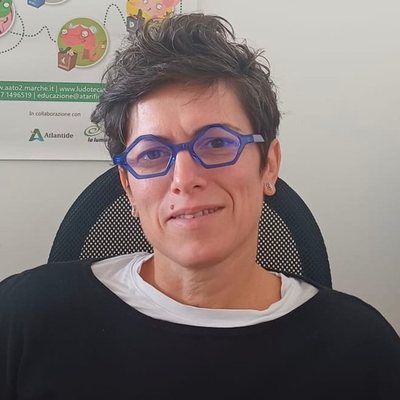 Karima AmiciInstitutional Communications
 Matteo CollariTechnical Planning
Climate Lab (operated by Impact Hub Vienna) is a specialized innovation hub in Vienna designed to accelerate the transition towards climate neutrality and circular economy. Climate Lab acts as an active ecosystem builder by bringing together startups, public institutions, corporations, scientific researchers and social innovators to form cross-sectoral alliances, build partnerships and test circular solutions.
Within CIRCOLINK, Climate Lab / Impact Hub Vienna (HUBVIE) serves as a key Austrian partner co-leading SHIFTER #2 alongside UAS BFI, Aalborg Municipality, AAU, and the City of Vienna’s ÖkoKauf program. Climate Lab contributes to the project across three main operational pillars:
In collaboration with its partners, Climate Lab is piloting a market-ready Circular Public Procurement (CPP) framework in Vienna to show how cities can seamlessly integrate reuse quotas, take-back obligations, and data-driven CO₂ accounting into municipal tenders.
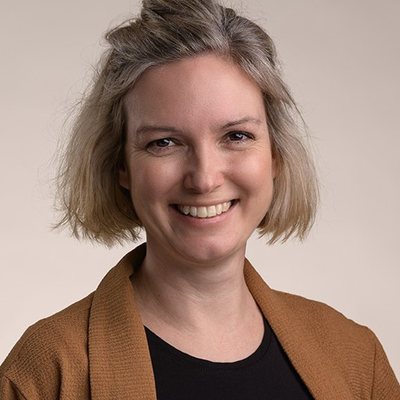 Helene PattermannCircularity Director
 Sara StosicInnovation and Project Manager
 Lara RothCommunity Lead